How Roof Insurance Claims Work After a Storm
Insurance claims can feel like a maze. This is a plain overview of the usual steps. Your policy and your insurer's rules always come first.
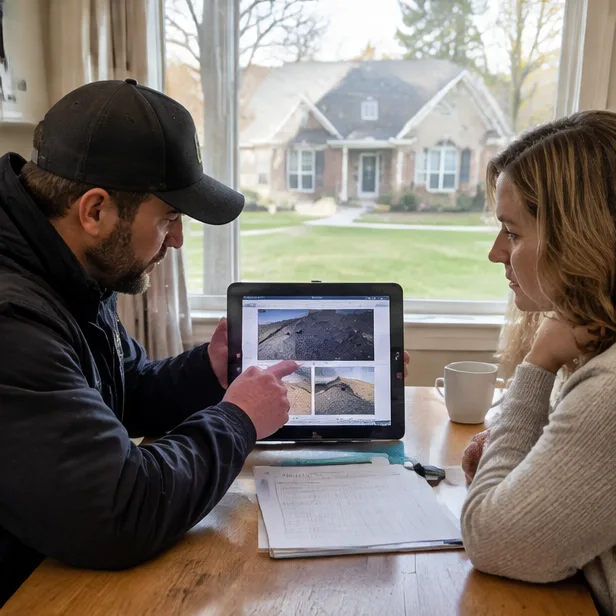
Read your policy
Find the deductible for wind and hail, which can be a flat amount or a percentage, and look for any deadline for filing. Policies differ a lot, so read yours.
Document the damage
Take photos of the roof, the gutters and the inside. A roofer can mark test squares and photograph them. Save receipts for emergency work such as a tarp.
File and meet the adjuster
After you file, an adjuster visits to inspect and write an estimate. You can ask a roofer to be there. The decision about what is covered belongs to the insurer.
Compare the scope
Read the estimate line by line. If the adjuster's scope leaves out damage you can show, a roofer can send photos and a written scope to support a review. No contractor can promise an outcome.
Quick answers
Do I have to use the insurer's list of contractors?
No. You can choose who repairs your roof.
Will the claim raise my premium?
It can, depending on the insurer and the state. Ask your agent about the effect before you file.
More storm notes
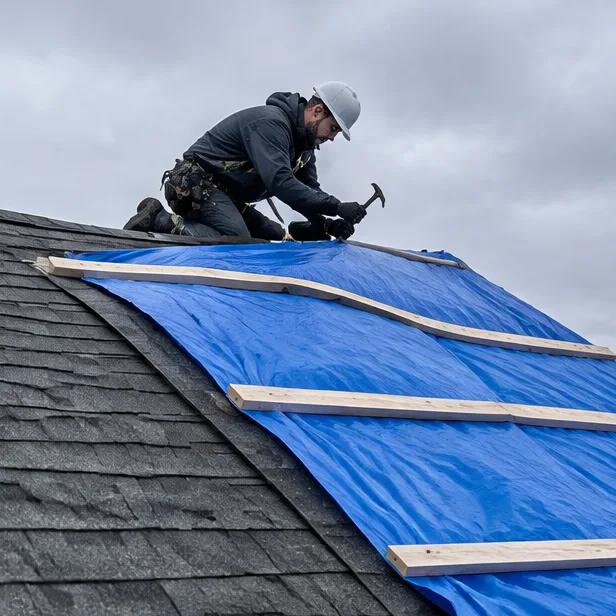 First 48 hours after storm damageA damaged roof can feel like an emergency, and it often is. Here is a calm, practical order of steps for the first two days.Read the note
 Signs of hail damageHail damage is often invisible from the street. Here is what to look for on the ground and on the roof, and why a pro inspection counts hits.Read the note
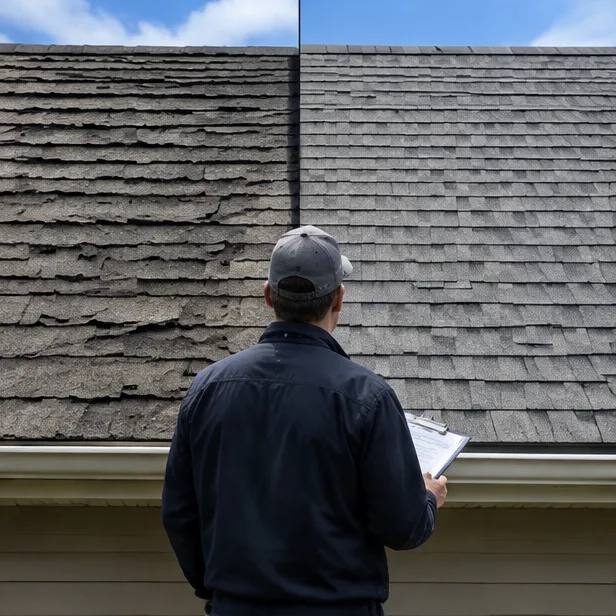 Repair or replaceSome roofs need a patch and some need a new start. These are the questions that decide it.Read the note
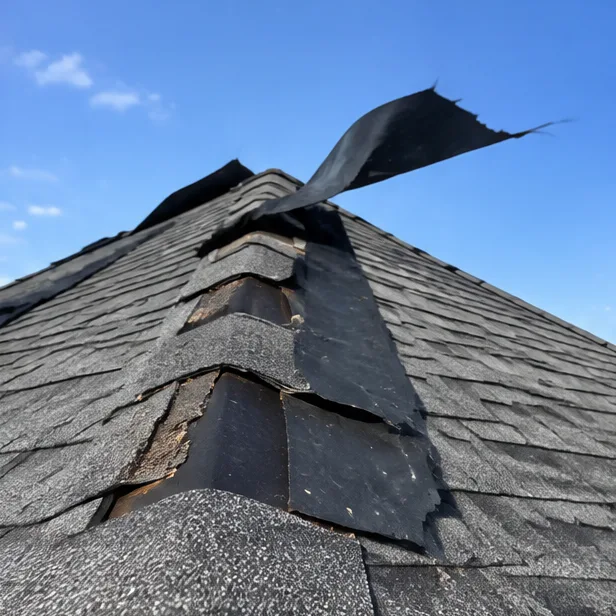 Signs of wind damageWind damage can be a missing shingle or a quiet crease. Here is what to look for after a windy storm.Read the note
Tell us what the storm did.
Pick up the phone or send the short form below. Either way a real person replies with a clear next step, and a tarp is the first thing we talk about if water is coming in.