How to Find a Roof Leak
Roof leaks rarely show up where the water enters. Here is how roofers trace them and what you can do before they arrive.
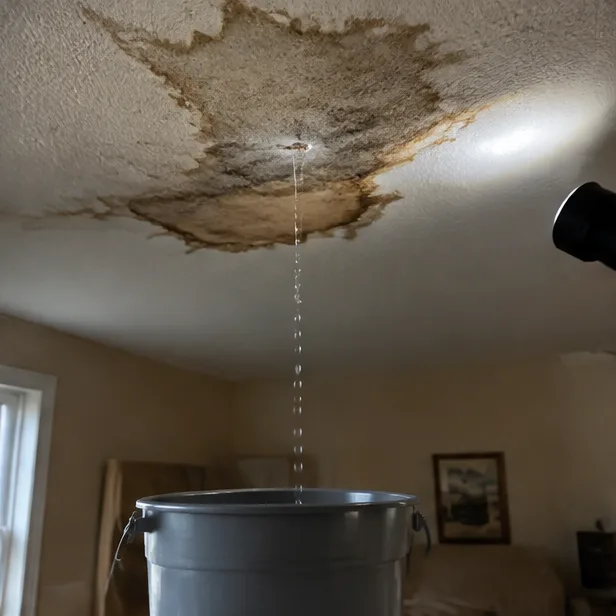
Start inside
Note where the stain is and how it changes. Look in the attic with a flashlight for wet wood, dark streaks or damp insulation.
Follow the water uphill
Water runs down rafters and along the underlayment before it drips, so the entry point is usually higher than the stain.
The usual suspects
Flashing at chimneys and walls, pipe boots, skylights, valleys, nail pops and missing shingles cause most leaks. Rarely is it the open field of shingles.
Test and repair
A roofer may test an area with a hose, one section at a time, to find the leak. The repair should fix the cause, not only cover the area with sealant.
Quick answers
Can I find a leak myself?
You can do the attic check and take photos. Walking on the roof is risky, so leave that to a pro.
Why does it only leak in some rains?
Wind-driven rain and heavy rain find openings that a light rain does not.
More storm notes
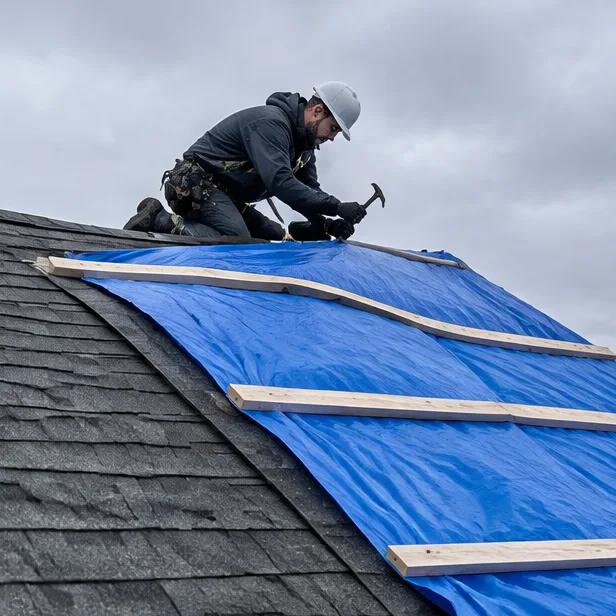 First 48 hours after storm damageA damaged roof can feel like an emergency, and it often is. Here is a calm, practical order of steps for the first two days.Read the note
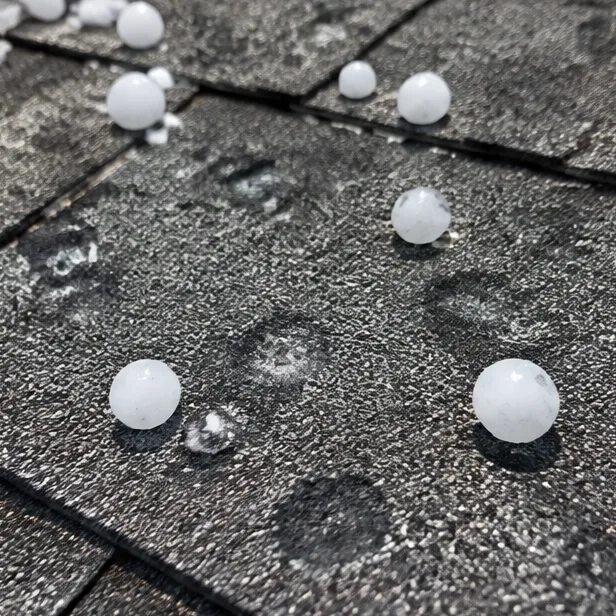 Signs of hail damageHail damage is often invisible from the street. Here is what to look for on the ground and on the roof, and why a pro inspection counts hits.Read the note
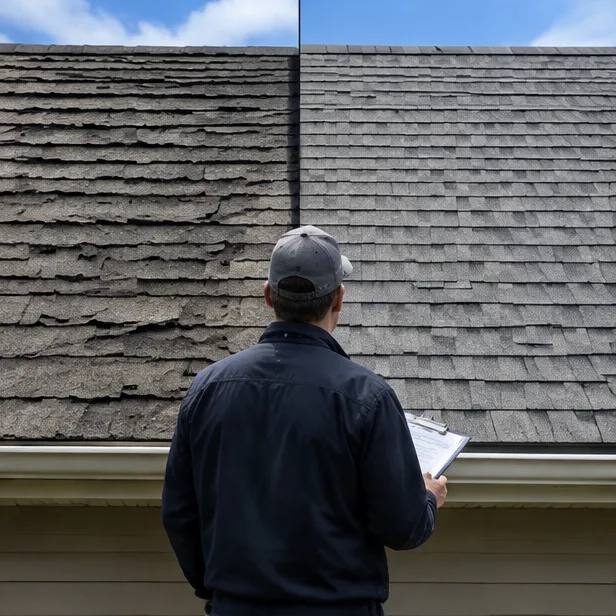 Repair or replaceSome roofs need a patch and some need a new start. These are the questions that decide it.Read the note
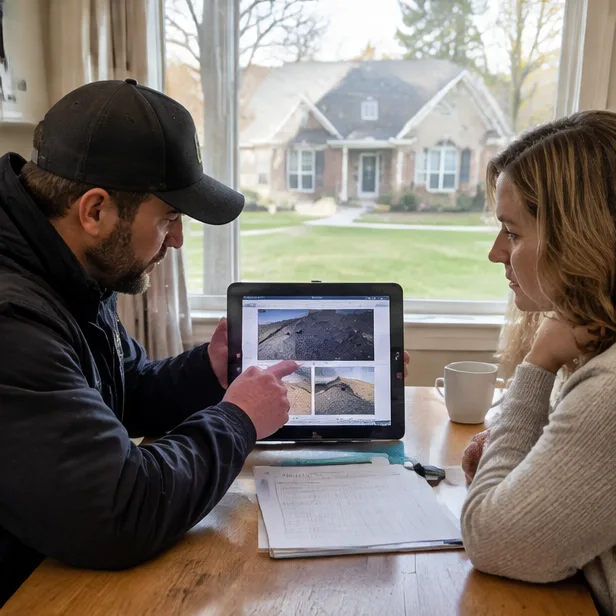 How a roof claim worksInsurance claims can feel like a maze. This is a plain overview of the usual steps. Your policy and your insurer's rules always come first.Read the note
Tell us what the storm did.
Pick up the phone or send the short form below. Either way a real person replies with a clear next step, and a tarp is the first thing we talk about if water is coming in.