What Is a Roof Test Square and Why Does It Matter?
If you have heard a roofer say test square, here is what it is, how it works and what it can and cannot tell you.
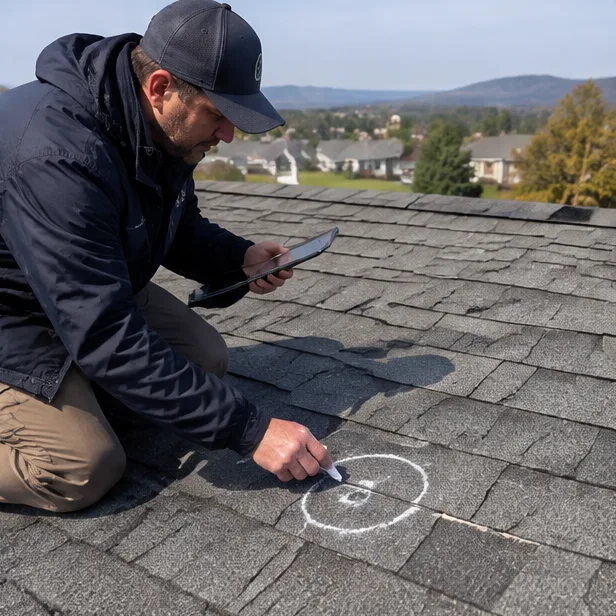
The basic idea
A test square is a ten foot by ten foot area, one hundred square feet, marked with chalk on a roof slope. The inspector counts the hail hits or the damaged shingles inside it.
Why one square per slope
Hail often hits slopes differently, depending on the wind direction. Many inspectors mark one test square on each slope so every slope is judged fairly.
What the count means
Many insurers use a threshold, often somewhere around eight to ten hits per square, to decide between repair and replacement. The number is set by the insurer, not by the roofer, and it differs between companies.
What a test square cannot do
It does not replace a look at the flashing, vents, decking and the age of the roof. It is one tool in a complete inspection.
Quick answers
Can I do a test square myself?
It is best left to a roofer, since it means walking on the roof. You can photograph what you see from the ground.
Do the numbers decide everything?
No. Age, condition, leaks and local code all matter for the final decision.
More storm notes
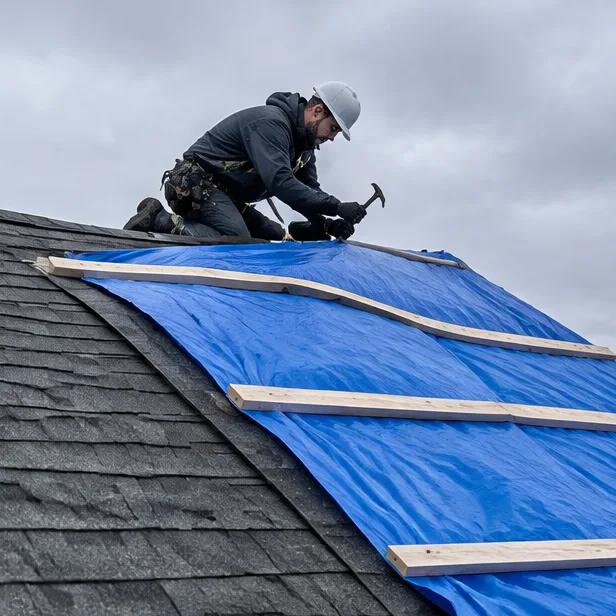 First 48 hours after storm damageA damaged roof can feel like an emergency, and it often is. Here is a calm, practical order of steps for the first two days.Read the note
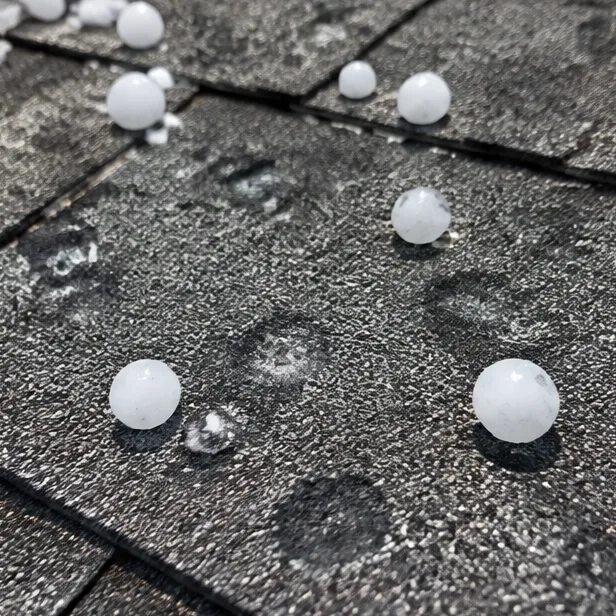 Signs of hail damageHail damage is often invisible from the street. Here is what to look for on the ground and on the roof, and why a pro inspection counts hits.Read the note
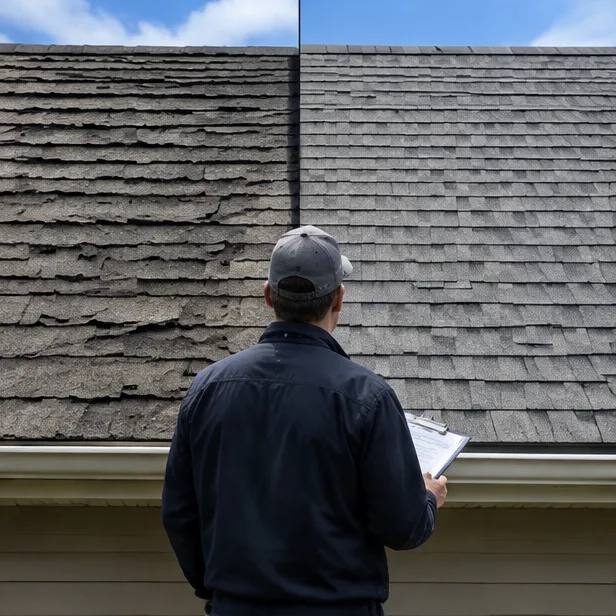 Repair or replaceSome roofs need a patch and some need a new start. These are the questions that decide it.Read the note
 How a roof claim worksInsurance claims can feel like a maze. This is a plain overview of the usual steps. Your policy and your insurer's rules always come first.Read the note
Tell us what the storm did.
Pick up the phone or send the short form below. Either way a real person replies with a clear next step, and a tarp is the first thing we talk about if water is coming in.