What to Do After a Storm Damages Your Roof: First 48 Hours
A damaged roof can feel like an emergency, and it often is. Here is a calm, practical order of steps for the first two days.
Make sure everyone is safe first
Stay out of any room with a sagging ceiling or a bulge of water. If you smell gas or see downed lines, leave and call the right emergency number. A roof can be replaced, a person cannot.
Photograph before you move anything
Take wide and close photos of the roof from the ground, the yard, the gutters and the damage inside. Include something for scale. Dated photos help the repair plan and any insurance claim.
Stop the water
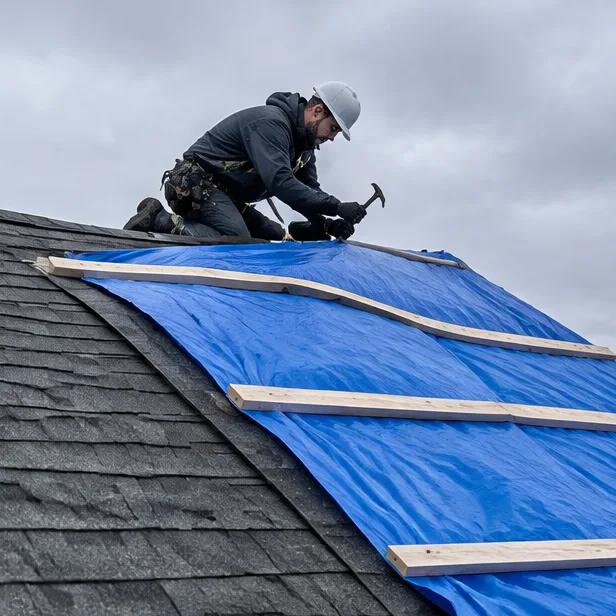
Put buckets under drips, move furniture and, if you can do it safely from inside, relieve a bulging ceiling with a small hole into a bucket. Then call for an emergency tarp. Do not climb onto a wet or damaged roof.
Call, then plan the repair
Ask for a tarp or dry-in first and the full roof inspection second. Keep receipts for emergency work. A written scope for the permanent repair comes after the inspection.
Quick answers
Should I climb onto the roof to look?
No. A storm-damaged roof can be slick, weak or unstable. Use binoculars or a phone zoom from the ground and call for an inspection.
When should I call my insurance company?
Soon after the storm. Read your policy for deadlines and for the roof deductible, and ask what documents they want.
More storm notes
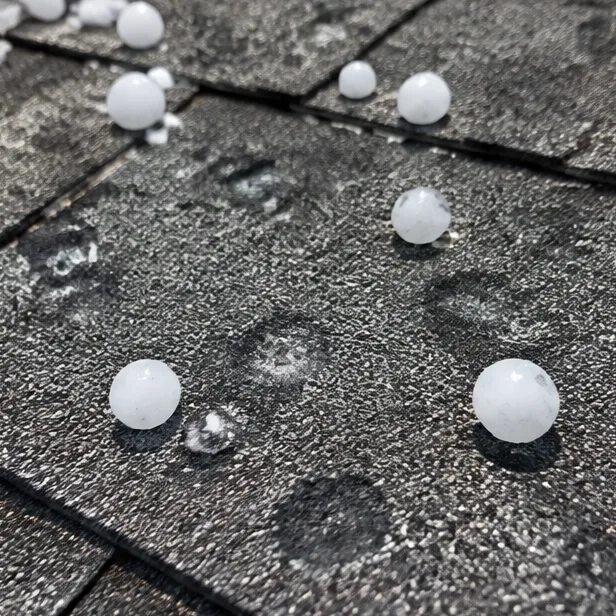 Signs of hail damageHail damage is often invisible from the street. Here is what to look for on the ground and on the roof, and why a pro inspection counts hits.Read the note
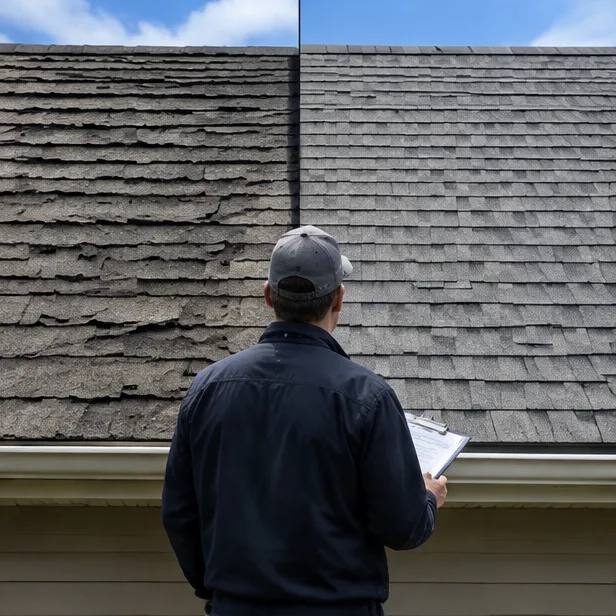 Repair or replaceSome roofs need a patch and some need a new start. These are the questions that decide it.Read the note
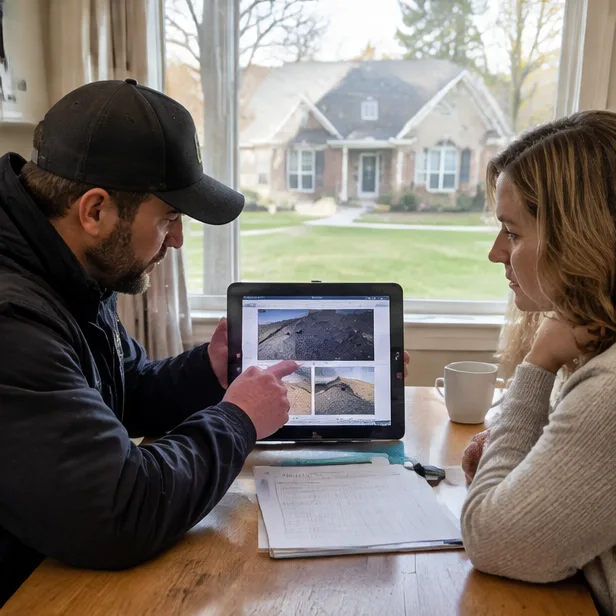 How a roof claim worksInsurance claims can feel like a maze. This is a plain overview of the usual steps. Your policy and your insurer's rules always come first.Read the note
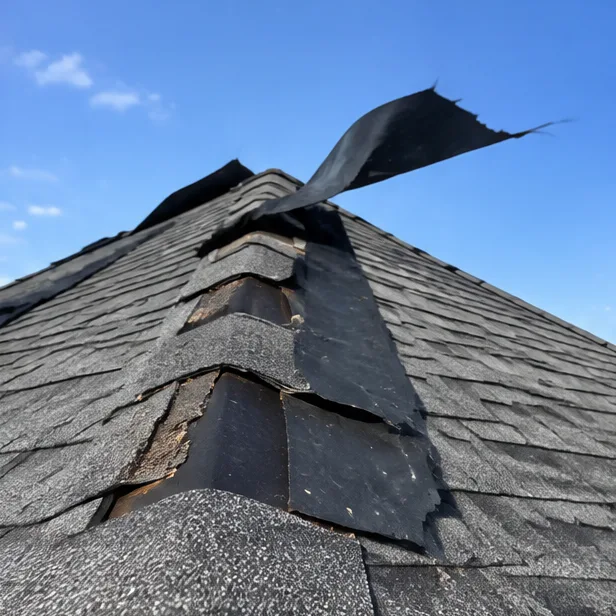 Signs of wind damageWind damage can be a missing shingle or a quiet crease. Here is what to look for after a windy storm.Read the note
Tell us what the storm did.
Pick up the phone or send the short form below. Either way a real person replies with a clear next step, and a tarp is the first thing we talk about if water is coming in.