How to Tell If Hail Damaged Your Roof
Hail damage is often invisible from the street. Here is what to look for on the ground and on the roof, and why a pro inspection counts hits.
Clues you can see from the ground
Dented gutters, dented vents and flashing, dinged air conditioner fins and damaged outdoor furniture show how hard the hail fell. If soft metals are dented, the shingles probably took hits too.
What hail does to shingles
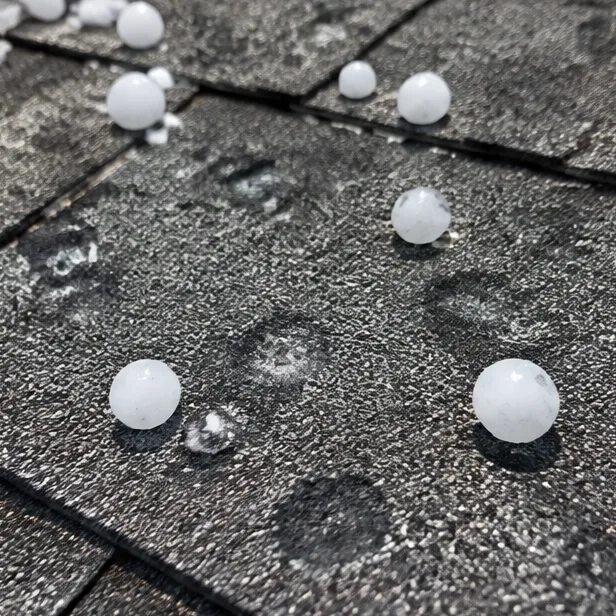
Hail knocks off the granules and leaves a dark, round bruise, sometimes with a crack in the mat underneath. The roof may not leak at first, but damaged shingles age quickly and can fail later.
Why a test square is used
A roofer marks a ten by ten foot square on each slope, counts the hail hits inside it and photographs the area. Many insurers use a count like this to decide between repair and replacement, though each company has its own rule.
What to do next
Photograph what you can, and call for a roof damage inspection soon after the storm. The sooner the roof is checked, the clearer the evidence is.
Quick answers
Can I see hail damage from the ground?
Sometimes you can see dents in soft metal and granules in the gutters. Bruising on shingles usually needs a closer look on the roof.
Does every hailstorm damage a roof?
No. Size, wind, the age of the roof and the roofing material all matter. Small hail may leave no damage, and large hail can cause a lot.
More storm notes
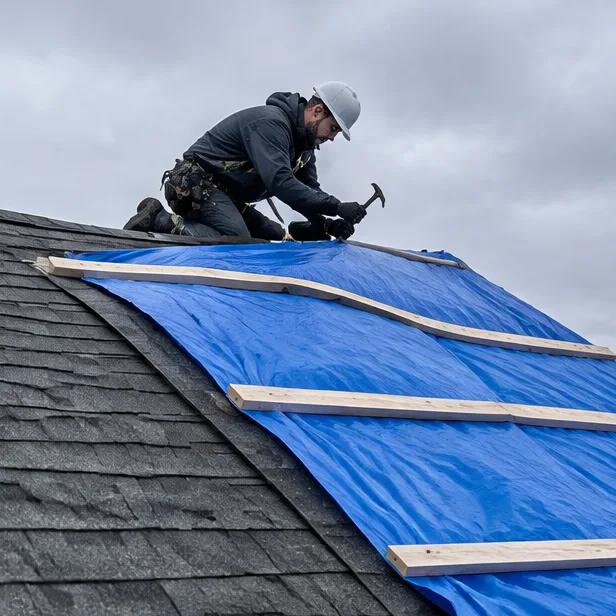 First 48 hours after storm damageA damaged roof can feel like an emergency, and it often is. Here is a calm, practical order of steps for the first two days.Read the note
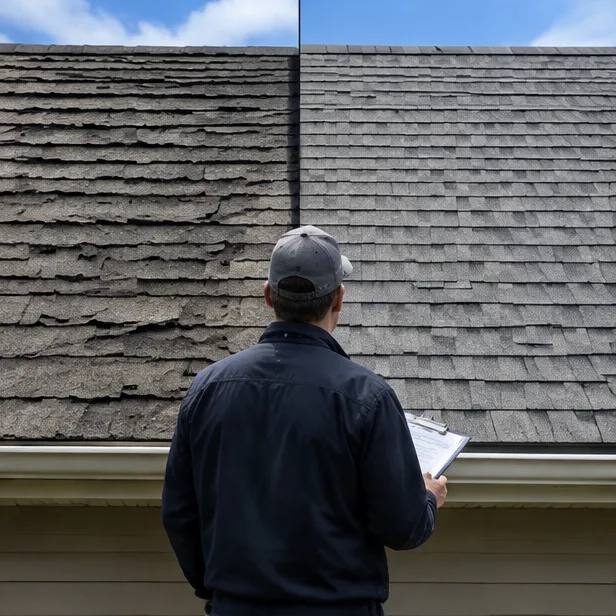 Repair or replaceSome roofs need a patch and some need a new start. These are the questions that decide it.Read the note
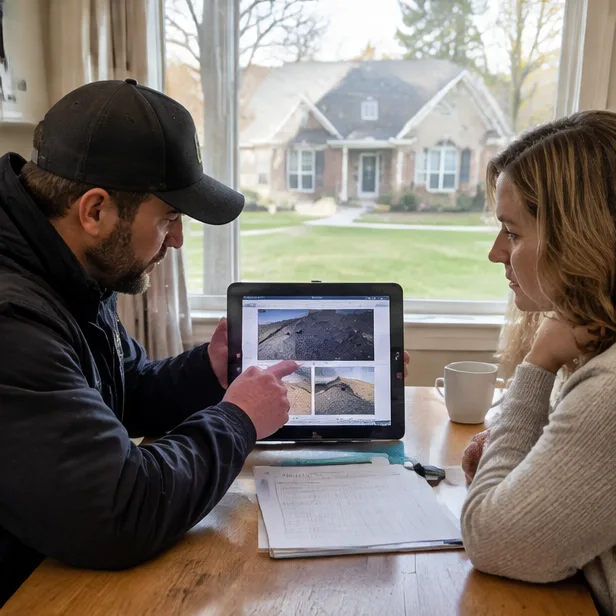 How a roof claim worksInsurance claims can feel like a maze. This is a plain overview of the usual steps. Your policy and your insurer's rules always come first.Read the note
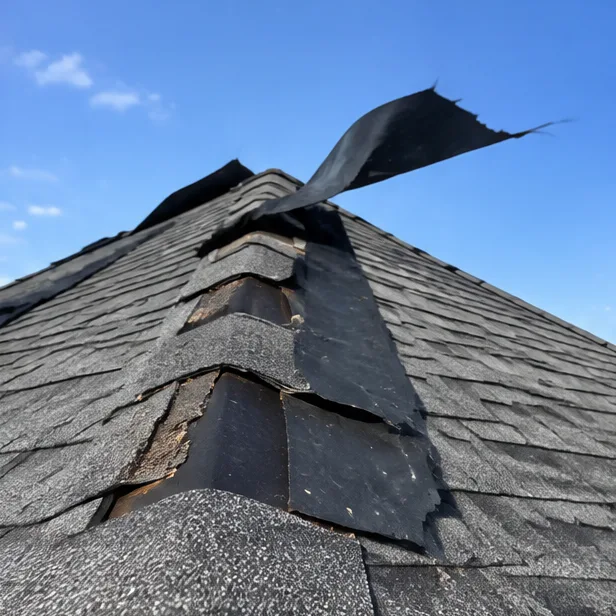 Signs of wind damageWind damage can be a missing shingle or a quiet crease. Here is what to look for after a windy storm.Read the note
Tell us what the storm did.
Pick up the phone or send the short form below. Either way a real person replies with a clear next step, and a tarp is the first thing we talk about if water is coming in.